


In case you missed my latest big Intellectual Humility study, check it out here: Why Changing Your Mind Is Harder Than It Sounds. Also this post on A.I. and Intellectual Dishonesty has been making the rounds if you missed it.
Without further ado:
Fear Extinction—or—The Science Of Changing Phobias To Strengths
1.
The defining fear of my childhood is seared into my memory.
The fear was heights. I vividly remember when it set in.
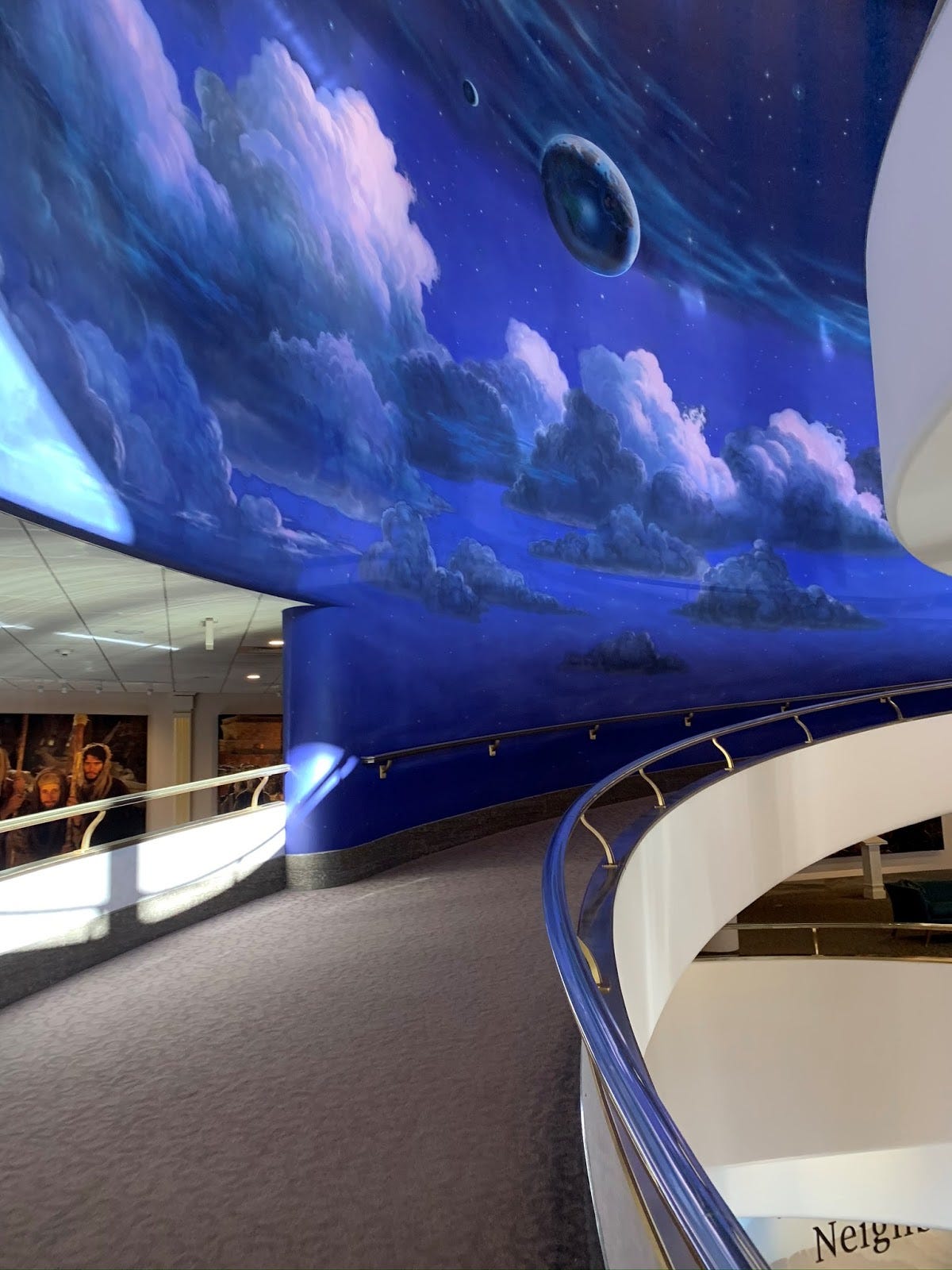
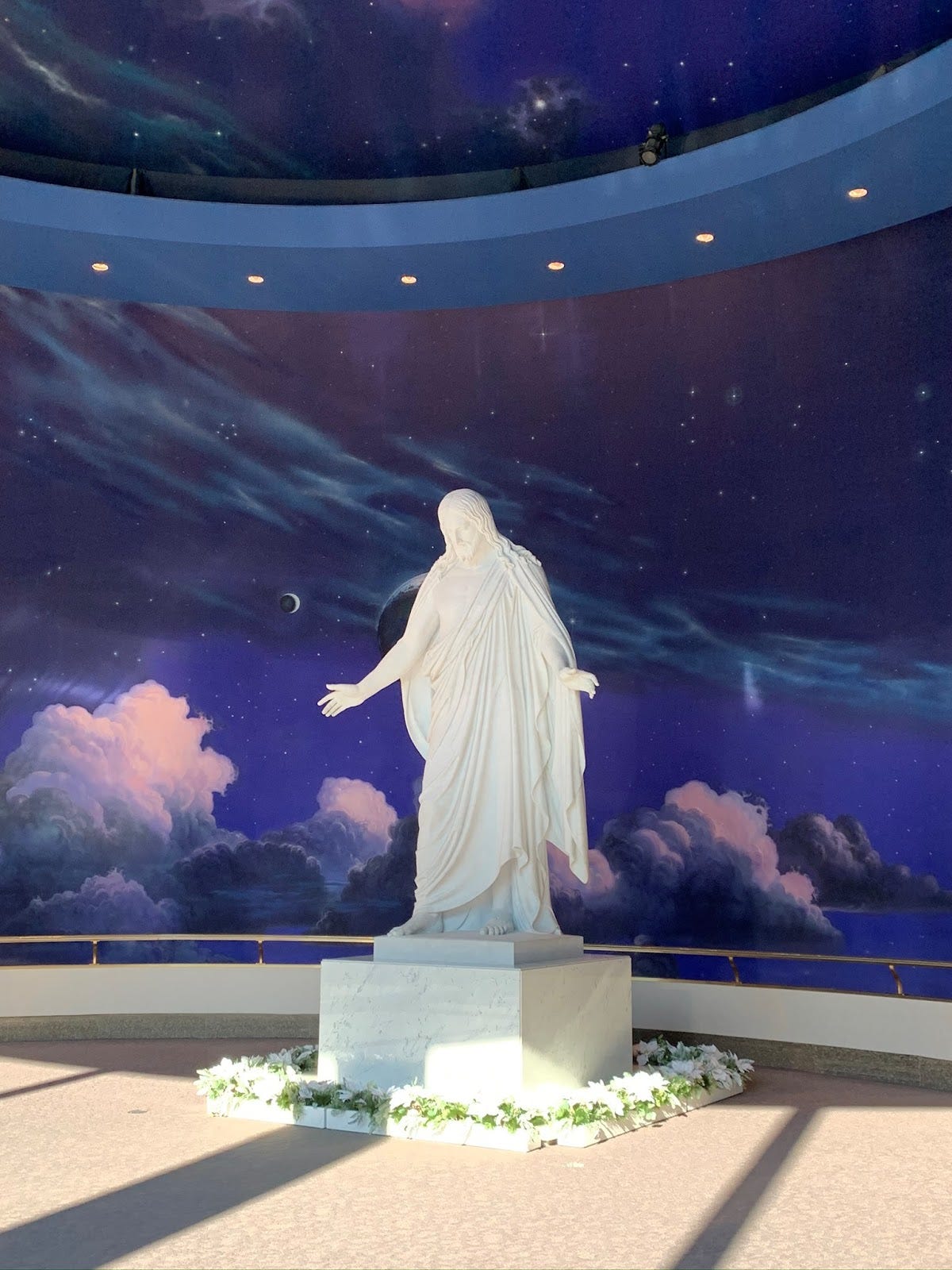
My family was visiting Salt Lake City, near where my grandparents lived. My parents took us to the LDS Church Visitor’s Center near the Great Salt Lake Temple—a sort of Mecca for Mormons. Inside this building is a spiral ramp that goes up and up and up until it reaches a big white statue of Jesus.
I remember going up this ramp, getting vertigo, and freaking out. It was so high, and so terrifying.
Here’s a picture of it:
From that point on, my fear of heights triggered anytime I stood near something higher than a doghouse. Tree. Roof. Airplane. Balcony. Holy crap balconies…
This fear was debilitating.
2.
I recently went to a Jeffersonian Dinner discussion with a bunch of space geeks. We’d convened a room full of diverse thinkers to discuss the themes of a film we’re producing about people who go to space and come home changed. (The phenomenon is called The Overview Effect.)
The first prompt of the evening was for each dinner guest was this:
“Tell a story about a time you felt fully alive.”
What popped to my head was the night a friend and I (secretly) climbed to the top of the Hell Gate Bridge between Queens and Manhattan.
Here’s the view:

Climbing this bridge, and seeing this view from the top of it, is one of the stand-out moments of my life. I was 30 years old.
For a kid who was terrified of heights (despite having Jesus waiting for me at the top of the ramp), standing 305 feet above the East River with no safety gear on top of a bridge named after the place Jesus doesn’t want you to go… well what’s that about?
Well there’s a scientific reason for it, turns out.
3.
Everyone has a friend who inexplicably LOVES horror movies.
Data backs me up here: some 17% of box office sales come from horror (as of 2025, according to Comscore). In fact, interest in horror is up, both year over year and decade over decade.
Obsession got all of Gen-Z off the couch this summer, to the tune of half a billion dollars.
Paranormal Activity is killing it on Broadway right now. (Starring a lead from Joe Lazer and my TV series Resignation!) Even before spooky season, the show was outperforming the market.

Ask someone who doesn’t love horror, “Why?” and they’ll tell you the same thing I do: “I don’t like being scared.”
But ask a horror movie lover the same question, and they’ll tell you, “It’s fun!”
Insane! I say.
But turns out science can explain this, too.
4.
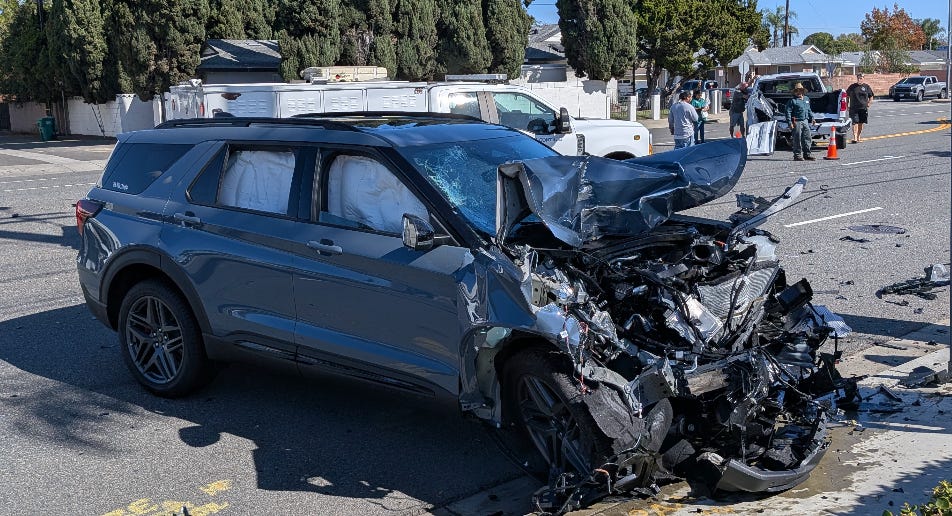
The fear response in the human brain is our friend. It helps us avoid danger. Literally yesterday as I stood at an intersection, I had a jump-scare when a truck loudly peeled out at way above the speed limit. My adrenaline shot up; my whole body went on alert. I wasn’t in the truck’s path, but had I been, this auto-response would have helped me jump out of the way.
Sure enough, the reckless driver hit someone half a block down the road. Everyone in the neighborhood heard the crash and rushed out with their cell phones ready to call for help.
This same, helpful human fear response gets encoded into our memories. And this is where trouble can occur.
“We need to have very strong memories of dangerous circumstances in order to avoid similar circumstances to recur,” the Nobel-winning MIT professor Susumu Tonegawa, who passed away this summer, explained.
But the trouble is, “If we are constantly feeling threatened we can become depressed.”
PTSD occurs when we revisit fear-inducing memories. Phobias can arise from strong negative memories, sometimes buried so deep we hardly remember the source so much as we remember the feeling.
Like that time I freaked out going up the spiral ramp as a kid.
5.
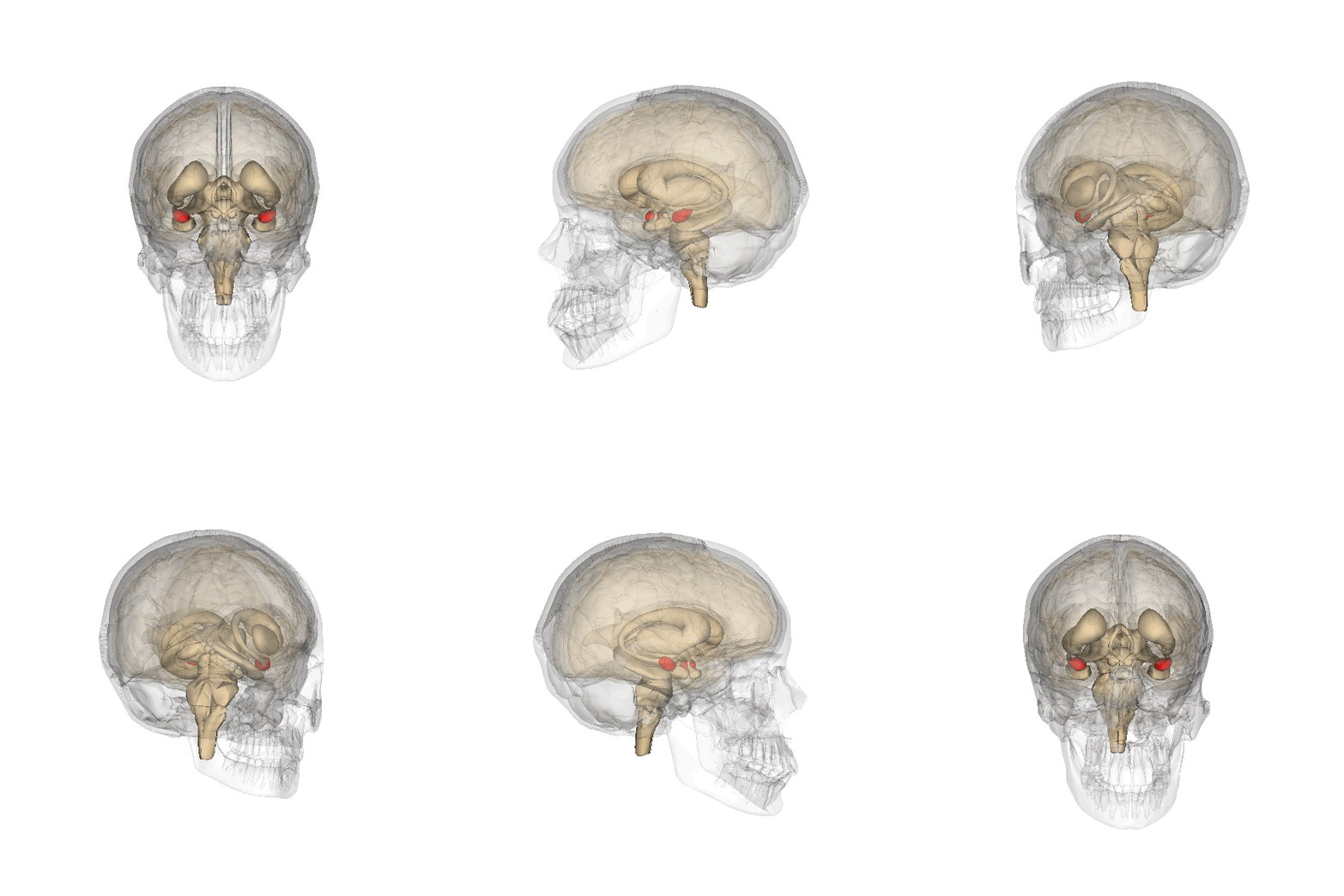
The culprit is a little almond-shaped mass in our brains called the amygdala.
Everyone talks about how this little bastard is the reason we’re all scaredy pants.
But it’s also the hero, it turns out, in a process called Fear Extinction.
6.
Last year, Tonegawa and his MIT colleagues published a groundbreaking neurobiology study on the subject of Fear Extinction.
The upshot of the study: Humans can override fearful memories with rewarding experiences.
“The extinction of conditioned fear responses is crucial for adaptive behavior, and its impairment is a hallmark of anxiety disorders such as posttraumatic stress disorder,”
they write in the study’s abstract, continuing to say:
“Fear extinction takes place when animals form a new memory that suppresses the original fear memory.”
The mechanism is dopamine. Our brain’s way of rewarding us for eating M&Ms and/or doing pleasurable survival activities.
When we have a pleasurable experience, dopamine fires up a group of special “Ppp1r1b+ neurons” aka “this one really cool spot” in the back of the amygdala. And if the dopamine shot happens during a situation that would normally trigger a fearful memory, the brain overrides the fear memory with a pleasurable one.
This is exactly what happened when I stood on top of the Hell Gate Bridge. For the better part of 30 years, heights had triggered my phobia, established all those years ago as a kid and reinforced every time I got close to a balcony.
To be clear, I was terrified every step of the climb up that bridge. But when I got to the top, and I saw that amazing view of New York City, I felt the dopamine surge.
It was like a switch flipped from “oh no!” to “this is amazing!”
To this day, my fear of heights has not returned.
7.
Film nerds have spilled much ink over the science of what makes a good horror movie scary. How the anticipation, the sound design, the surprises, et al, trigger our brains to feel what the characters on screen are feeling, and how that keeps us glued.
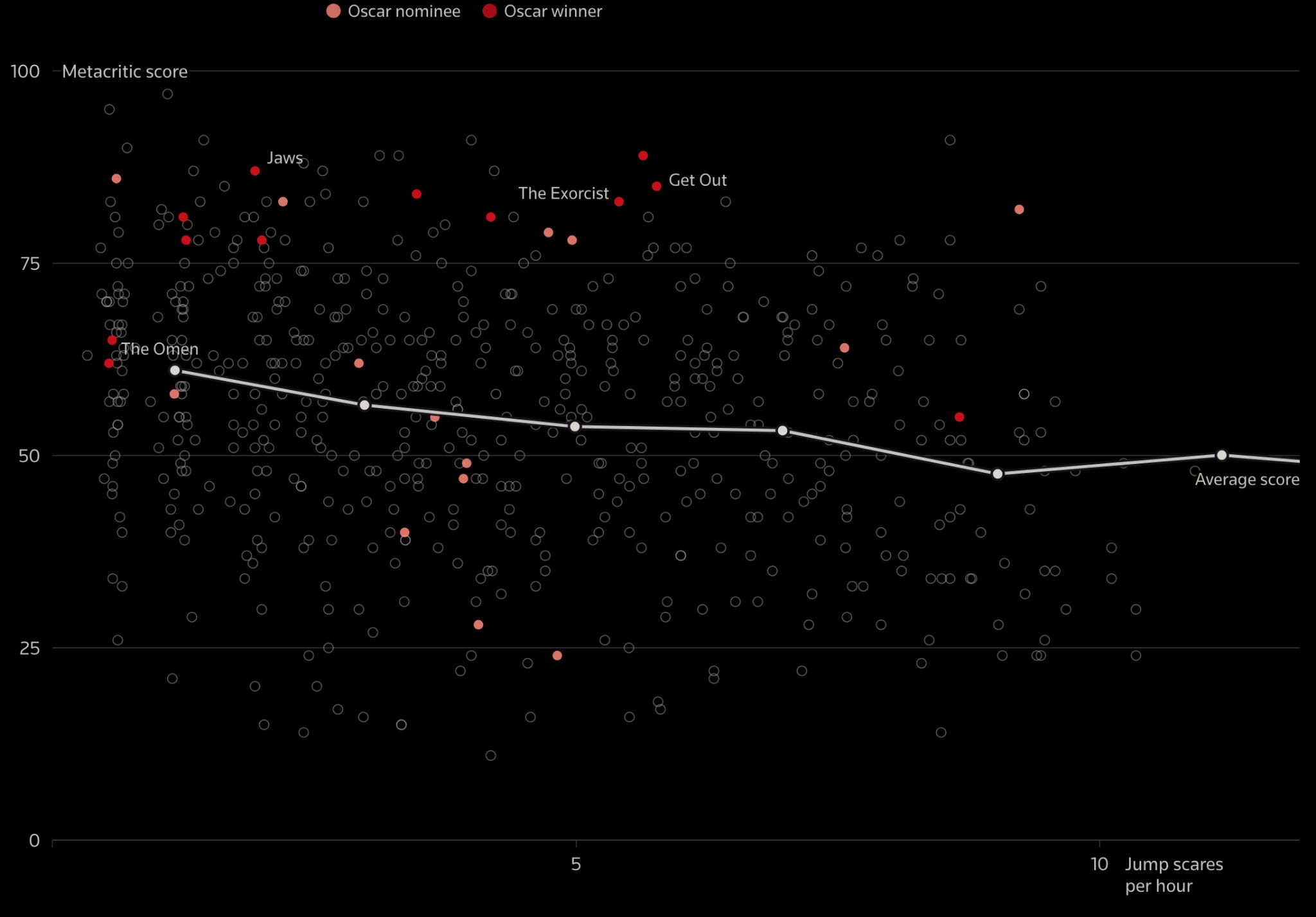
But I find the science of why people actually like the horror movie experience more fascinating.
Some say it’s the feeling of “relief” after a stressful experience that they like. Thrill-seekers like getting close to danger—which in a film is entirely simulated and therefore okay.
All that can be true for some. But Tonegawa & co’s Fear Extinction research explains it even better. A good horror movie is fun. We get dopamine-induced pleasure from solving a mystery. Our brains reward us when we go through a simulated action sequence, an escape from “danger”, or a heightened audio-visual sensory experience. That “relief” you’re describing? It’s dopamine, too.
The dopamine overrides our actual fear. Which makes us braver in similar situations. It makes horror movie lovers better equipped to survive the next movie (and love it).
I have climbed many tall things since conquering the Hell Gate Bridge.

8.
Halloween’s over. Real Life is back in town. What’s threatening to trigger your fear response now?
Public speaking?
Delivering bad news?
Having a hard conversation?
AI ruining the world?
There’s a legitimate difference between threat detection—being real about what’s coming up ahead—and letting fear freeze or depress us from doing what we need to do.
The most up-to-date neuroscience research you could ask for says this: dopamine overrides fear, so we don’t freeze anymore.
Doing the thing itself—giving the speech, delivering the news, having the conversation—will trigger relief. Doing the thing in a way that triggers a dopamine reward—making it fun if possible, rewarding yourself after if not, focusing your beliefs and attention on the awe and the positive outcome—literally helps our brains to turn our fear around.
We need the threat detection. We also need to not freeze in the face of threats.
What I’m saying is watch The Matrix. Get hyped about kicking the AI’s ass. We’re going to need your full capacity to tackle what’s coming.
9.
In the quest to override fear with reward, taking the initial plunge is probably the hardest part.
For that, there’s always that friend who loves horror movies who can turn on the TV for us. Let their enthusiasm infect you into taking the first step.
Like I mentioned, I didn’t climb the bridge alone.
Shane Snow is an author and keynote speaker focusing on the science of change, teamwork, and storytelling.
This is fascinating! Great piece!