


There’s a common misconception about what makes a great culture. It stems from research in the 1980s that showed that people who had similar interests were happier at work. This got conflated over the years (starting with several popular books in the ‘90s) to mean that people who are similar are more productive together.
This is flatly untrue. People who are similar may gain strength in numbers, and efficiency in movement, but they by definition cannot exceed the sum of their parts.
Whether we’re talking about a business team or a nation state, there’s an important principle when it comes to culture that I think we shouldn’t forget:
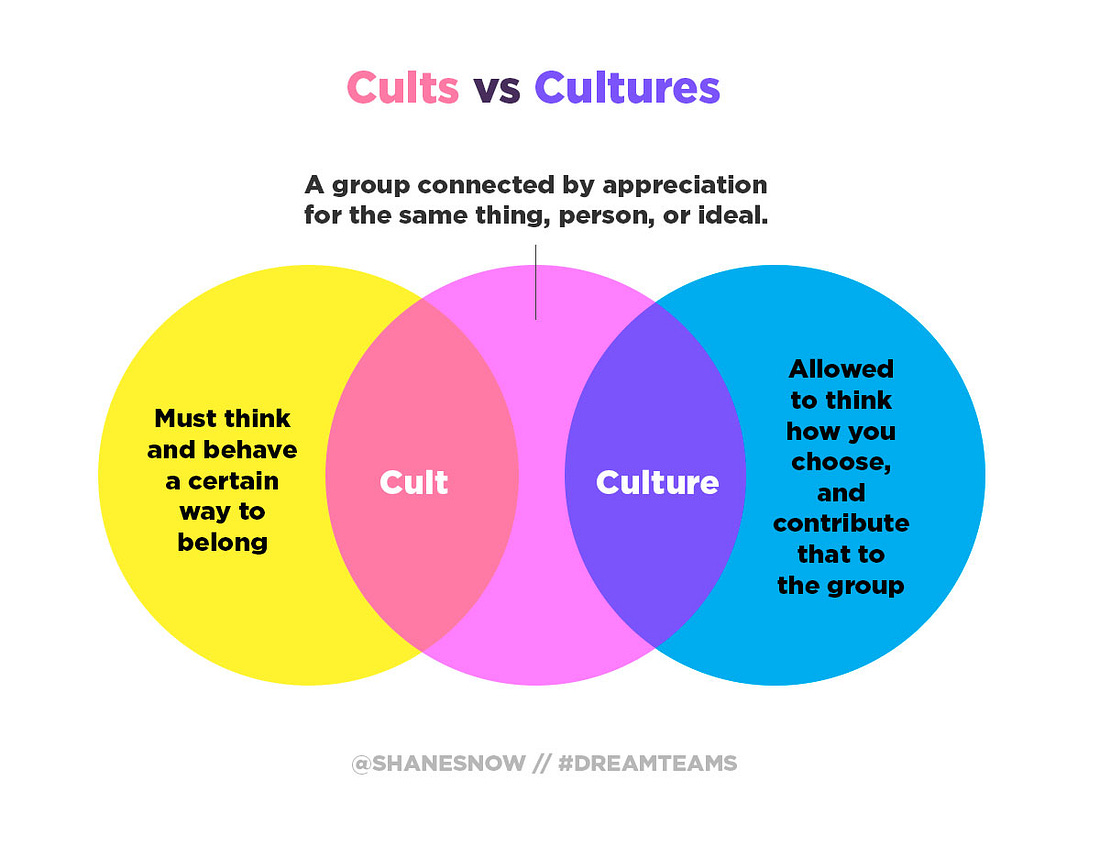
So when we talk about culture today, why do we say, “You’re in or you’re out?” Perhaps it’s because we forgot what culture is. Perhaps it’s because we’ve spent so much time becoming little cults and punching other cults in the face, rather than hashing ideas out like ladies and gentlemen—and realizing our differences are what make things interesting.
I come from a big family (7 kids!). Now that we’re all grown ups, we have branched out to different cities and careers and ideas. Some of us go to church. Some of us are hippies. Some of us have tattoos. Last election we voted for 3 different candidates. And the best part: we’re still family. We can be goofballs without being shunned. We can all come home for Thanksgiving and share stories and debate and still feel the love. That’s culture, and I’m grateful for that.
Anyone who’s seen Hamilton (or who knew the story before) knows that the great compromise between Thomas and Alexander wasn’t easy. Nobody left that room perfectly happy. But nobody told anyone to STFU. And this bought us a couple hundred years of relative stability.
So next time a debate fires up—in our companies or countries, with our friends or our families—let’s stop and ask: does culture have to be a war? What if we made it a potluck instead?
From Mexico with love,
Shane