


Buenos dias! Instead of my usually essay this week, I want to share 2 quick thoughts. One about how to upgrade your personal problem-solving and career thinking, and one analogy that will help you explain to your relatives what’s really going on in the world with gas prices, government policy, and technology adoption:
#1: Good Trouble & 10x Thinking
Civil rights strategist Bayard Rustin, who organized the 1963 march on Washington, once said, “We need, in every community, a group of angelic troublemakers…”
The idea was that when powerful forces work to prevent important changes (be they corrupt leaders or simply inertia), we can spur change through respectful disobedience. I call this “breaking rules that aren’t rules.” For Rustin and his colleagues like Dr. King, this looked like sit-ins. For the hackers and innovators like Embrace (baby warmers) and Skrillex (remember dubstep?!) I wrote about in Smartcuts years ago, this took the form of asking questions you weren’t supposed to ask. “What if this hospital device could cost 100x less?” “What if I didn’t ask permission from a record label to publish my own music?”
This is the kind of thinking that AJ Thomas, head of Good Trouble Ventures, looks for when investing in people and products that can change the world. Joe Lazer and I interviewed AJ about her incredible story (from being a teen R&B artist to being a homeless cell phone salesperson to leading the famous GoogleX moonshot factory) in this week’s inspiring episode of The Art Of The Zag.
Check this episode out if you’re interested in:
The gap between promise and reality of AI (check out Joe’s awesome post about this specific angle from the podcast here)
“Hacking” the career ladder (for yourself or someone in your life who needs a next thing). AJ’s mindset of adaptation and perseverance gave me goosebumps. Her reframe on the job/career challenges for entry level workers is a must-listen for new grads.
To be inspired to create some “good trouble” yourself. (Inspired by the “10x Thinking” of GoogleX.)
#2: The Bathtub of Hormuz
I found myself getting mad at Claude yesterday for taking 5 minutes to give me an answer to a research question for a new theatre project I’m working on. (By the way, the news just broke that my team and I are working on WARBUCKS the Musical, a preview to Annie that takes place in the tumultuous run-up to World War I—an era of tech and social upheaval with crazy parallels to today. I’ll keep y’all posted behind the scenes as the show progresses!)
My impatience with Claude is insane when I think about how a couple years ago similar research would have taken me 8 hours or more. My only comfort is that this kind of thing is universal, human nature. More than ever now, we expect things to be instant and convenient.
But that kind of thinking can get us in the bad kind of trouble. Specifically because it can distort our picture of reality.
Thinking about this reminded me of an analogy that has helped me both when thinking about my own problems and the macro problems of the world:
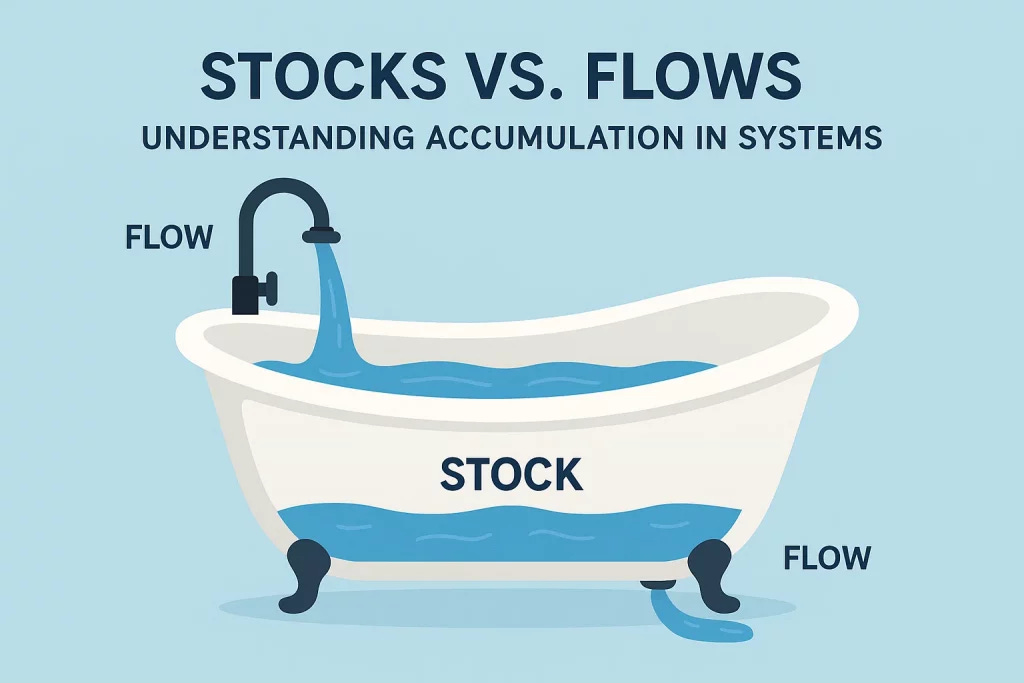
All The World’s A Bathtub
A bathtub has two holes: the one where the water comes in, and the one where the water goes out. If you turn the water on without stopping the drain hole, the bathtub will not fill.
If the drain hole is stopped up, the water level will rise. When you unplug the drain hole, the water level will fall.
Now, if you unplug the drain while running water, the water level will lower more slowly—or it could stay the same level if you have the right amount of water entering the tub.
I’m telling you as someone who runs a bath for a 3 year old every night. But you already know this, so thanks for sticking with me til the good part…
A bathtub also has two temperature handles. If the water in the tub is warm, you can turn the Cold handle and put cold water into it.
But it takes some time for the temperature of the whole tub to change. Even if you set it to put the world’s most scalding water in, the bathtub won’t get hot immediately.
The United States started a war in Iran. Iran closed the Strait of Hormuz, through which much of the world’s oil and fertilizer is shipped. And we’ve seen gas prices skyrocket.
Now, the US government keeps saying that once Hormuz is open, prices will go down, but that’s not how bathtubs work. The water’s cold, and draining. Even if you plug the drain now and blast the hot water, it’s going to take a while for the tub to get back to full and warm.
Four years ago when inflation was still high, people blamed whoever was in charge in every country right then. But that’s not how bathtubs work. The pandemic filled the tub with scalding water. Unplugging the drain doesn’t mean the tub is instantly the right level. And it takes time to cool off.
If everyone you know is suddenly using newfangled technology to write their emails and presentations, read their reports, and “accelerate” their productivity—and you notice that the world hasn’t suddenly collapsed… the conclusion is not that AI isn’t going to cause any of the problems experts are predicting. The conclusion isn’t, “Yay, I don’t need to think about this!” A bathtub still feels fine for a little while after you unplug the drain. Until the water level dips low enough that you start to shiver.
It’s easy to buy the quick conclusions—”See, it’s their fault!” or “See, the warnings were wrong!”—because those conclusions often serve our wishful thinking. But the Bathtub of Hormuz tells us we need to step back and think about the time it takes for the bigger system to adjust before we fall for the quick conclusion.
Make a great day!
–Shane
I'll be thinking about bath time differently tonight. Thanks for this post!