


At the height of the Cold War, the Soviet Union and the collective nations known as the West competed over practically everything. Politics. Technology. Chess. Math. Going to space.
But there was one arena in which there was no competition. Hockey. The Soviets owned that one.
Between 1960 and 1990, the Soviet national hockey team won nearly every international match it played, and that’s the dullest way to put it. The Russians destroyed.
In the 1976 Olympics, for example, they trounced the United States 6–2, mopped up Finland 7–2, and beat Czechoslovakia in the finals for the Olympic gold medal.
Their fourth gold medal in a row.
The Soviet coach was a freak, a legend, a Zen master on ice. Anatoly Tarasov was his name. He made his young athletes study chess and dancing. They practiced jumping off walls. They learned to do ninja moves wearing skates. They sang songs with lyrics like “cowards don’t play hockey.”
Tarasov’s mashups of athletic and mental conditioning made his students see the world—the whole world—as relevant to hockey.
Another freaky coach followed: Viktor Tikhonov, a Soviet army general who was known for his dictatorial style, ruthless eleven month long practice regimens, and the hatred his players had for him.
Out of this ice-dojo arose a group of athletes that would go down in history as not just one of the world’s best hockey teams, but one of the best sports teams of all time.
They called them the Red Army. Here was their most famous starting lineup, known as the Russian Five:
Viacheslav “Slava” Fetisov, defenseman. Natural-born leader and decorated hockey god. Both charming and terrifying, “like a bear.” Said to be one of the greatest players ever.
Alexei Kasatonov, defenseman. Disciplined, patriotic, and unflinching. Fetisov’s best friend on and off the ice.
Vladimir Krutov, forward. Known as the “Russian tank.” Standing five feet nine and weighing close to two hundred pounds, Krutov was a beer keg on skates and the reliable “soul” of the team.
Igor Larionov, center. Called “The Professor,” Larionov was cerebral, a tactician. Skinny and deceptively tough, his specialty was misleading opposing players.
Sergei Makarov, forward. Makarov was a sniper, feared by goalies everywhere. He could find the back of the net from anywhere on the rink.
They were backed up at the net by legendary goaltender Vladislav Tretiak, known for his stoicism and quick thinking. And this doesn’t include the dozen other talented players in the club at a given time, each with his own fearsome quirks and specialties, such as longtime team captain Valery Vasiliev, who was known for punishing opponents while hungover from partying all night and even once finishing a game after having a heart attack on the rink.
You get the idea. They were monsters.
But it wasn’t just a stack of great individual players that made the Soviet team dominate. North American teams were known to scout young hockey players from junior leagues and groom them for the pros from absurdly young ages. Canadian pro hockey players tended to be flawless skaters with big muscles. (And even bigger mullets.)
During much of the Red Army’s winning streak, Canada actually had players with better individual statistics on its national team, such as the legendary Wayne Gretzky.
No. It was their style, the Russians insisted, that made their team special. No matter who was on the ice, opponents claimed the Red Army could read minds. It could be Fetisov and Kasatonov defending the net as one. Or champion center Sergei Fedorov circling the defense, distracting them while a teammate sliced in for a shot. Or, in later years, it could be Vladimir “the Impaler” Konstantinov gliding through the enemy like a human spear, passing the puck between the enemy’s legs.
Regardless of the configuration, they were unstoppable.
After losing the Canada Cup to them, Wayne Gretzky would tell Sports Illustrated that the Russians simply “dismantled” him. US coaches would describe the Red Army as having “a sixth sense” and “eyes in the back of their head.”
While Western hockey teams played aggressively—smashing into opponents like it was rugby—the Soviets performed a deadly ballet. They took a sport synonymous with beer and brawling and turned it into an art form.
Here I have to pause. I have a confession to make: I’m not really into sports. Forgive me, Red Sox Nation. Put down your pitchforks, Cheeseheads. You can blame my dad. He was an engineer working in the sports-starved desert of southeast Idaho. I grew up thinking a wide receiver was something you plug into a radio. In my home, The Game was never “on.” To this day I rarely tune in to televised sports that don’t involve race cars.
Also: The old Soviet national hockey team footage is mesmerizing. Watching them play— sports fan or no— you just can’t look away. They were so good that when Team USA narrowly beat them at the 1980 Olympics, the moment was declared a “Miracle on Ice.”
It turns out that “Political Skulduggery on Ice” would have been a more accurate description. While the win was certainly cathartic for America, the Russians essentially blew the game because of politics. USA’s deciding goals happened after Coach Tikhonov pulled three Red Army players out of the game, including goaltender Tretiak, and replaced them with players from a KGB-sponsored hockey club in an attempt to score points with the Kremlin. And still the Soviets nearly won.
Galvanized by that defeat and vowing never to divide their team again, the Red Army reigned for the next ten years. They won the gold in 1984 and 1988. They placed first in just about every other international championship, winning hundreds of games by embarrassing margins. The crew would go back-to-back years without losing a single match.
And then the Cold War ended.
The Iron Curtain fell.
For years the Soviet players had been paid peanuts, but now they were free to play for Western teams with real salaries. One by one, the stars of the Soviet national team left Russia to play for their former enemy: North America’s very own National Hockey League.
Fetisov and Kasatonov went to the Devils. Krutov and Larionov went to the Canucks. Makarov went to the Flames. Each was heralded as a hero that would change the franchise.
And each sucked.
None of the Russian Five’s new teams won championships. Their stats tumbled. Many of the great Red Army players were older now—almost washed-up. They didn’t have the same chemistry with their new US and Canadian teammates—nothing like back home. Even when they ended up on teams stacked with hotshots, somehow they couldn’t seem to win. And on the rare occasion they got teamed up with a fellow player from the old days, it made little difference: they still couldn’t bring back that old magic. Tarasov’s choreography and Tikhonov’s discipline were no match for the ever larger and fiercer North American players.
The Russians could adapt, but they couldn’t compete like they used to.
Team owners lost patience. Kasatonov got traded to the Blues, then the Ducks, then the Bruins. Makarov was traded to the Sharks.
Fetisov went into a slump. In the old Soviet days he was one of the top scorers in the world, but in New Jersey he wasn’t even near the top of his own team.
Sports headlines, once jubilant about the Red Army coming to America, now sounded the alarm.
“Devils Hit A Drought In Scoring,” the New York Times lamented in 1992, noting that some saw a lack of teamwork at the root of the problem.
Those magic years as impossible champions lasted longer than Fetisov or any of his comrades would have dreamed when they started out as kids. But like most such stories, the magic finally fizzled out.
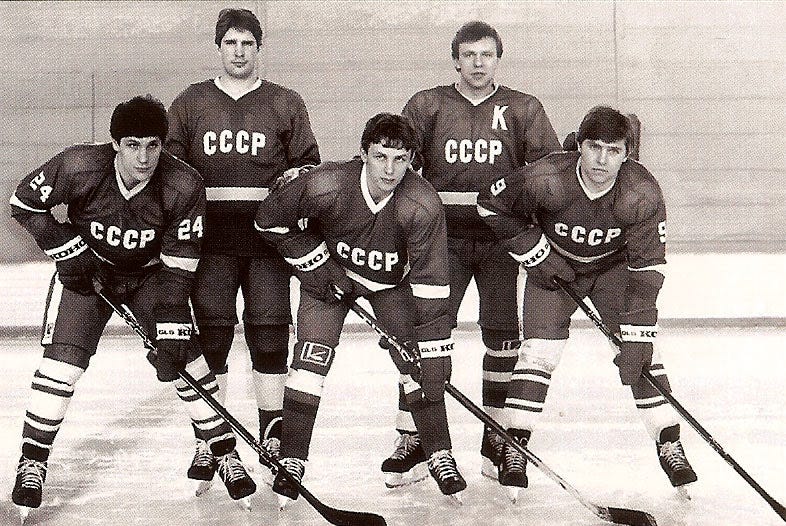
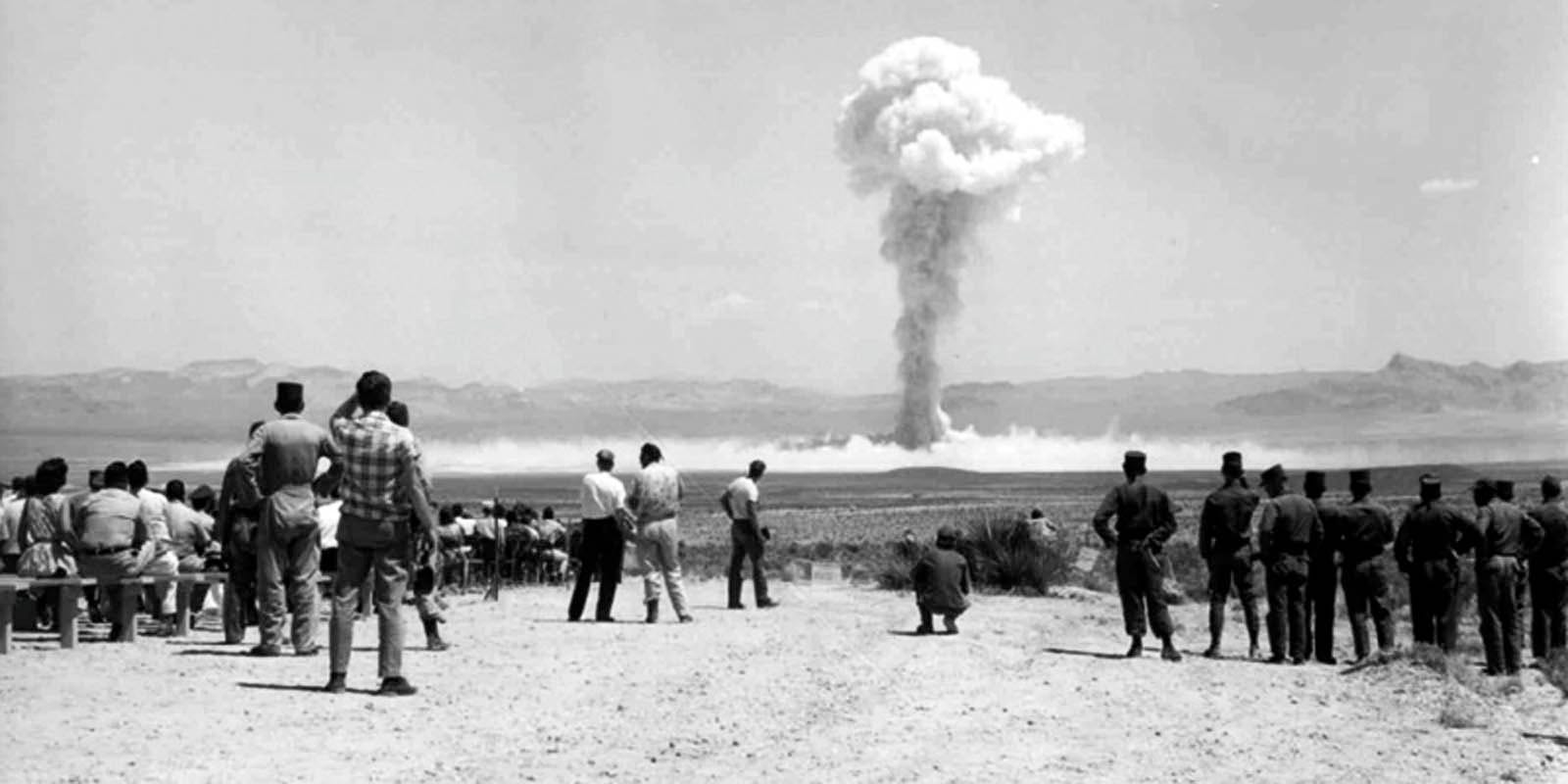
When Ronald Reagan referred to the Soviets as “monsters” during the run-up to the 1980 presidential election, he wasn’t talking about their hockey players. He was talking about the Soviet Union as a whole, as enemies whom the United States would make sure were “destroyed with nuclear weapons” if it came to it.
Soviet premier Nikita Khrushchev wasn’t talking about hockey either when he famously told Western diplomats, “We will bury you.” For decades, those words reverberated across the Northern Hemisphere.
So while Tarasov’s budding young stars sang songs about hockey together, their peers in public schools sang about how to duck and cover under a desk if and when The Bomb went off. When they traveled to America to slap around little rubber disks into little nets for crowds of beer guzzlers, their countries were busily manufacturing weapons of mass destruction.
Though all those kids really wanted to do was play, hockey— like chess and space and all the other competitions— became a proxy fight for two countries who hated each other and their ideas: a fight that by all accounts could escalate to nuclear war and the end of civilization.
Ironically, to develop the nuclear technology that their countries threatened each other with in the first place, scientists from Russia and America had to get along—and collaborate with women and men from Germany and France and Poland and Britain, and many other places. They built on each other’s work, shared research and laboratories, and discovered how smashing atoms together created heat, which could make steam to turn turbines, which could make electricity.
I was keen on this story growing up, because that engineering job my dad worked at in the Idaho desert happened to be a nuclear power plant. This is how the seed of science was planted in my little nerdy heart, leading me to pursue my career in science and technology journalism. I learned from a young age how the brilliant work of chemists and physicists and electric engineers and tinkerers of all kinds led us to figure out how to smash atoms together and harness the resulting heat to make electricity.
And I learned that this was how every other breakthrough in history happened, from the steam engine to stuffed-crust pizza: when humans put their heads together.
Physically speaking, we are built for collaboration. Our brains are equipped for empathy. Our tongue and larynx can produce a range of sounds that put a dolphin to shame. The whites of our eyes are three times larger than those of other primates, helping us track what the other is looking at when words aren’t possible. These features of body and brain raised us from a humble subtropical survivor to the global apex predator that built the pyramids, painted the Sistine Chapel, and filmed season 8 of Real Housewives of New Jersey.
And yet, as the Cold War and every other reminiscent conflict between humans remind us, there’s a depressing side to our nature when we come together.
Our brains are wired to collaborate but also to be suspicious of other tribes—to “bury” those who don’t look or think like us. And statistics show that working together is bound to be frustrating even when we start off liking each other.
As one famed organizational psychologist puts it, “Virtually all of the studies unambiguously reveal that individuals outperform teams in terms of both quantity and quality.”
We pull a little less hard on the tug-of-war rope when we’re part of a crew than when we’re by ourselves. We shout only 74 percent as loud in a group of six as we do alone, even when we think we’re shouting our loudest. And we have repeatedly demonstrated that when we put people together to brainstorm, most groups will come up with fewer creative ideas—and fewer good ones—than the individual members of the group when they were allowed to brainstorm on their own.
But the hard things in work and life often can’t be done alone. We know that, too.
It takes two people to make a baby. It takes a dozen to make a pro hockey team. It takes the work of hundreds to develop a scientific breakthrough like nuclear power, and thousands to operate a Fortune 500 company. It takes a gosh-darn village to raise a child.
Major progress requires major numbers of people working together.
When we put our heads together, we hope we’ll become better, not just bigger. But the reality is, we almost always don’t. We have to fight against the inherent drag that comes with group work. And we end up fighting each other. Farm becomes fief. Polity becomes caste. We beat our plowshares into swords and turn nuclear energy into a bomb.
And so, Team USSR and Team USA played hockey in the shadow of two giants with intercontinental ballistic missiles pointed at each other.
Humans need to work together to accomplish anything big. But—in our teams, our nations, our companies and families—our collaborative efforts seem to move with all the thrilling speed of a glacier, and often end in an avalanche of our own creation.
And yet! Occasionally we experience an opposite phenomenon.
Every once in a while, we encounter—or sometimes are lucky enough to be part of—a magical moment when a group of people somehow becomes more than the sum of its parts.
This is how breakthrough progress happens, from having a baby to harnessing the atom. On those rare occasions it happens to us, we feel limitless. Like the Soviet National Hockey Team felt during that brief and beautiful stretch of history before it all fell apart.
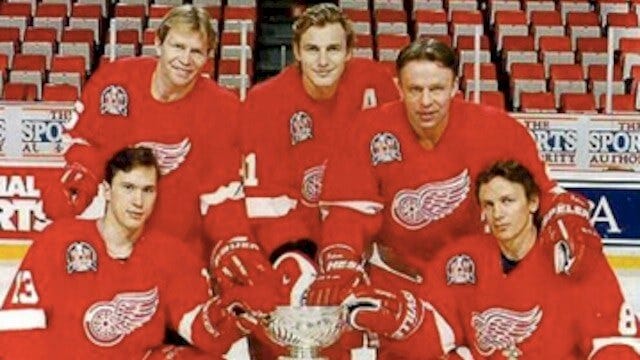
In 1994, after the hockey players from the Soviet national team had aged over the hill or fallen out of the spotlight in the NHL, Scotty Bowman, the head coach of the Detroit Red Wings, began quietly gathering up the old Soviet national team players to his club.
He recruited Fetisov, who was pushing Old Man Status in sports terms at that point.
He got Larionov in 1995.
He picked up the young Soviet forward Vyacheslav Kozlov, and snatched up comrade Konstantinov (“The Impaler”), along with Fedorov, whom the Red Wings had drafted a few years before.
And rather than forcing a playbook on them, he stepped back. “I just let them do what they wanted to do,” he said.
In their first year, this reborn Russian Five won more games than any other team in the NHL.
Larionov went from scoring two points the season before with the San Jose Sharks to seventy-one for the Red Wings. Fetisov tripled his total as well. Fedorov won a trophy.
Suddenly they were unstoppable again.
The following year the Red Wings won the Stanley Cup. And they won it again the next year.
When documentarians asked Fetisov to describe what happened, he said, “Together again on the same team, it was like a fish put back in the water.”
This is a book about Dream Teams, about groups of people that make breakthroughs together.
Like Fetisov and his fellow hockey players, they do the incredible against all probability. In the chapters ahead, we’re going to meet one Dream Team after another: creative agencies, rap groups, software companies, urban planners, social movements, and ragtag armies that pulled off amazing things together. We’re going to uncover the secrets of individuals who make outstanding collaborators, and look at what separates groups that simply get by together from groups that get better. And in examining the hidden psychology of great teams, I will argue that there’s something wrong with the common wisdom about human collaboration—and a way for us to harness our collective potential better than before.
Our greatest moments in history—not just in sports, but in business and art and science and society—happened when humans defied the odds by coming together and becoming more than the sum of their parts. When they linked arms, stood on the metaphorical shoulders of the giants who came before them, and saw further together. Those old Soviet hockey players were that rare kind of team that turns the depressing truth about human chemistry on its head. Though they were each excellent players, the synergy that made them the best even after years apart— and with a new American coach—is not explained by skill or talent or practice time. Opposing teams had better player statistics.
Other hockey players had practiced together as many years as the Russians had. But somehow, what Tarasov’s kids had between them was special.
There’s science behind this kind of magic. Dream Teams are not just random. They’re the result of subtle interactions, and ones that are not obvious.
In recent years, we’ve made new discoveries in psychology and neuroscience that can help us unlock the magic that vaulted the Russian Five to greatness. And that science can help us work better together in any field.
So what is that special sauce? What are those eleven secret herbs and spices that make some people more amazing together than apart? And conversely, what makes the teams of the most skilled and talented people on paper so often fail to exceed the sum of their parts in real life?
What makes our society, full of brilliant and hardworking and passionate people, so capable of destroying itself, when we have more resources and knowledge and technology and beauty between us than ever before?
As we’ll discover in the coming chapters, the answers are often counterintuitive. The kinds of teams that change the course of history—that transform industries, break cycles of oppression or stagnation, or win hockey championships for decades in a row—are not the usual suspects.
What makes them different lies beneath the surface.
But once we understand how it works, the science of Dream Teams is something that we can apply to everything. From our personal relationships, to our everyday work, to our businesses and causes, to our communities, and to a world itself that desperately needs us to stop breaking down because of each other, and start breaking through together.
This book is about how that magic happens.
You just read Chapter One of Dream Teams. Each month this year, I’m sharing another chapter of the book. Subscribe to follow along.
Make a great day!
–Shane
Great insight. However , a small deviation. It’s been almost a month since I became a paid subscriber, and the promised signed copy of the book is not received. May I seek status , please and the expected date of receipt. Thank you.